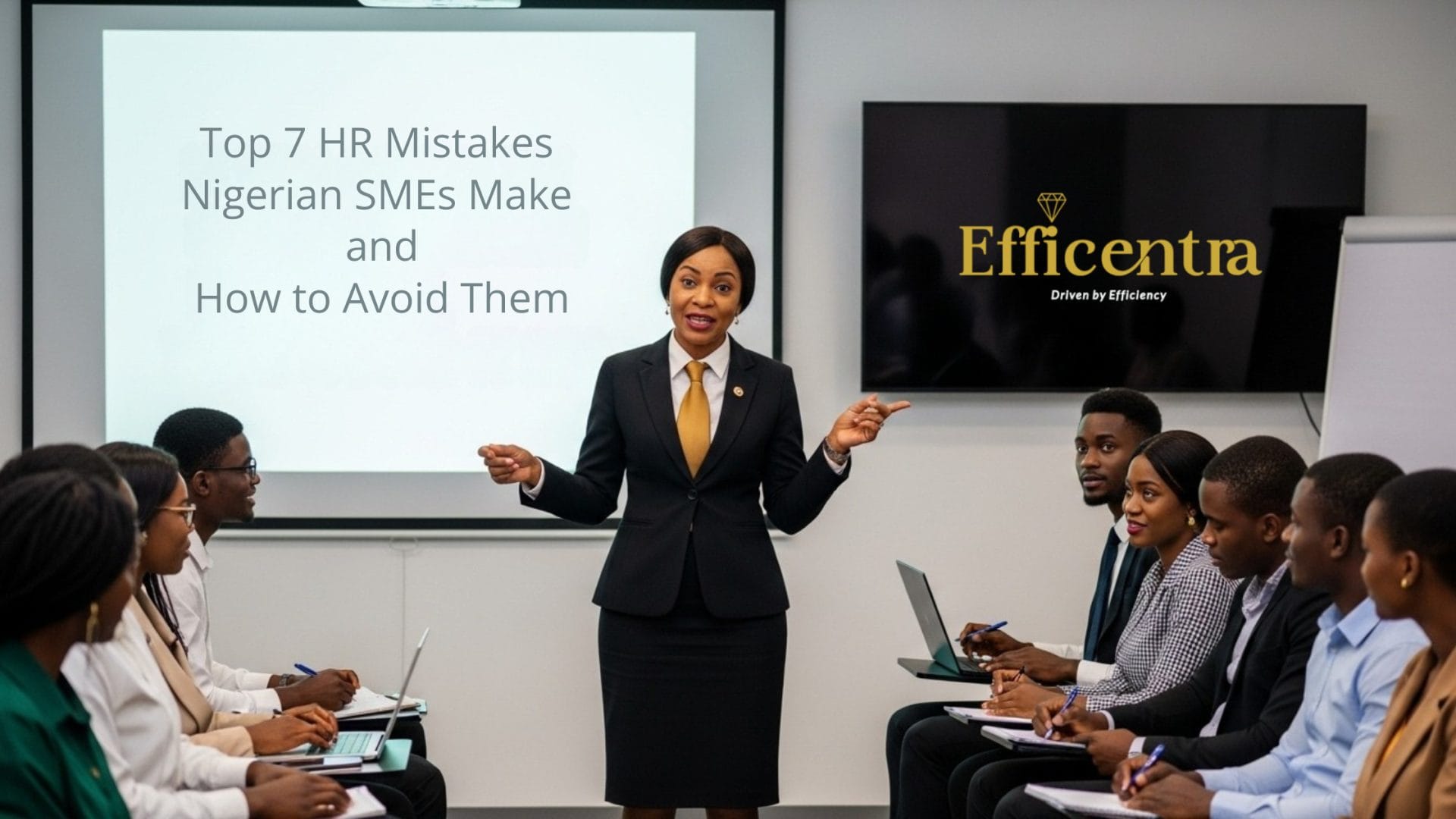
Top 7 HR Mistakes Nigerian SMEs Make and How to Avoid Them
HR mistakes Nigerian SMEs make are more common and more costly than most business owners realize. From unstructured hiring and missing contracts to delayed payroll and non-compliance with labour law, these mistakes can quietly erode team performance and expose businesses to serious risks. In Nigeria’s competitive and rapidly evolving market, SMEs cannot afford to have weak HR systems. Without structure, clarity, and compliance, even small teams can face significant setbacks.
According to a 2022 report by NSITF, over 60% of Nigerian SMEs lack valid employee compensation coverage, and many are unaware that HR non-compliance could lead to fines, lawsuits, or even business closure.
If you’re running or planning to launch an SME in Nigeria, understanding the most common HR mistakes is the first step toward avoiding them. Below are seven of the most critical HR missteps, along with practical solutions to correct them.
Mistake 1: Hiring Without Defined Job Roles
When SMEs hire based on familiarity or urgency, roles and expectations are often unclear. Recruiting friends, family, or candidates without job-specific skills can lead to overlapping responsibilities, accountability gaps, and underperformance.
The Risk:
Confused reporting lines, poor productivity, and low morale.
How to Avoid It:
- Draft a clear job description for each role.
- Outline reporting lines and Key Performance Indicators (KPIs) before hiring.
- Use structured interviews and fair assessments.
Mistake 2: Relying on Verbal Employment Agreements
Some SMEs rely on verbal agreements or WhatsApp messages to onboard staff. Without a formal contract, disputes can arise regarding pay, notice periods, and termination.
The Risk:
Legal exposure, loss of trust, and labour disputes.
How to Avoid It:
- Issue written contracts within 3 months, as required by the Labour Act.
- Include terms for salary, working hours, leave, code of conduct, and termination.
Mistake 3: Ignoring Labour Law Compliance
Many businesses delay or skip registering with statutory bodies, such as the National Pension Commission (PENCOM), the Nigeria Social Insurance Trust Fund (NSITF), the National Housing Fund (NHF), and the Industrial Training Fund (ITF). This often results in fines or enforcement action.
The Risk:
PENCOM fines can reach up to 200% of the owed contributions, NSITF shutdowns may occur, or lawsuits may be filed.
How to Avoid It:
- Register with PENCOM, NSITF, NHF, and ITF as required.
- Remit pensions, Pay As You Earn (PAYE), and other statutory deductions monthly.
- Get an HR or legal expert to conduct a compliance audit. You can also read this guide on data protection compliance from PlanetWeb for further insights.
Mistake 4: Operating Without HR Policies
When decisions are made informally, employees perceive bias, and managers struggle with consistency.
The Risk:
Claims of unfair treatment or wrongful termination.
How to Avoid It:
- Create an employee handbook with clear HR policies.
- Cover leave rules, disciplinary procedures, working hours, remote work, and grievance resolution.
- Distribute during onboarding.
Mistake 5: Poor Leave and Attendance Management
Informal systems for leave approval often result in unapproved absences or team overload during critical projects.
The Risk:
Productivity loss, unbalanced workloads, and resignation surges.
How to Avoid It:
- Utilize tools like Excel, Human Resource Information System (HRIS), or Zoho People to track leave, as they provide easy-to-use templates, cloud accessibility, and scalability tailored for small to medium-sized enterprises (SMEs).
- Document and approve all leave formally.
Mistake 6: Skipping Performance Management
Without defined goals or clear feedback systems, employees are left to guess.
The Risk:
Disengagement, low output, and unfair promotions.
How to Avoid It:
- Set KPIs that align with business goals.
- Conduct regular appraisals and feedback sessions.
Mistake 7: Poor Payroll Practices
Delays in salary payments or lack of payslip transparency can erode employee trust. In Nigeria, delayed pay also breaches Section 15 of the Labour Act, which requires timely and regular payment of wages.
The Risk:
Employee litigation and reputational damage.
How to Avoid It:
- Develop a payroll calendar and stick to it.
- Automate payroll using software.
- Provide payslips showing PAYE, pension, and deductions.
Avoiding HR Mistakes Nigerian SMEs Commonly Make
HR is more than admin; it is the infrastructure that enables growth. For Nigerian SMEs, avoiding these mistakes means saving money, retaining top talent, and staying compliant.
Building an HR structure doesn’t have to be expensive. Even small steps, such as creating a basic leave policy or issuing standard offer letters, can make a significant difference. It starts with putting the right policies, systems, and expectations in place to avoid the HR mistakes Nigerian SMEs are most prone to. To better understand the role of compliance in business resilience, see this article on data protection case studies.
Need help creating a compliant HR framework?
At Efficentra, we help Nigerian SMEs structure their HR systems to be efficient, compliant, and built for growth. You can contact us directly to get started.
Book a free HR compliance audit today and avoid costly penalties that could set your business back. Take the first step toward compliance and peace of mind.
📧 info@efficentra.com
📞 +234 902 554 3185
🌐 www.efficentra.com