3 Nigerian Industrial Court (NICN) Rulings Your Nigerian SME Must Know
5-7 Minute Read
Running a Small or Medium Enterprise (SME) in Nigeria demands resilience, from managing infrastructure costs to navigating market volatility. The last battle you want to fight is in court, especially the NICN. Yet many SMEs unknowingly expose themselves to significant financial penalties through outdated Human Resources practices.
The National Industrial Court of Nigeria (NICN) operates as a specialized court with constitutional powers under the Third Alteration Act of 2010. Through Section 254C of the Constitution, the Court applies international labour standards alongside Nigerian law, often prioritizing employee rights and procedural fairness over rigid contractual interpretations.
For SME founders, the cost of non-compliance particularly regarding disciplinary procedures and dismissals continues to escalate. Here are three critical principles, illustrated by recent NICN decisions, that you must integrate into your HR practices today.
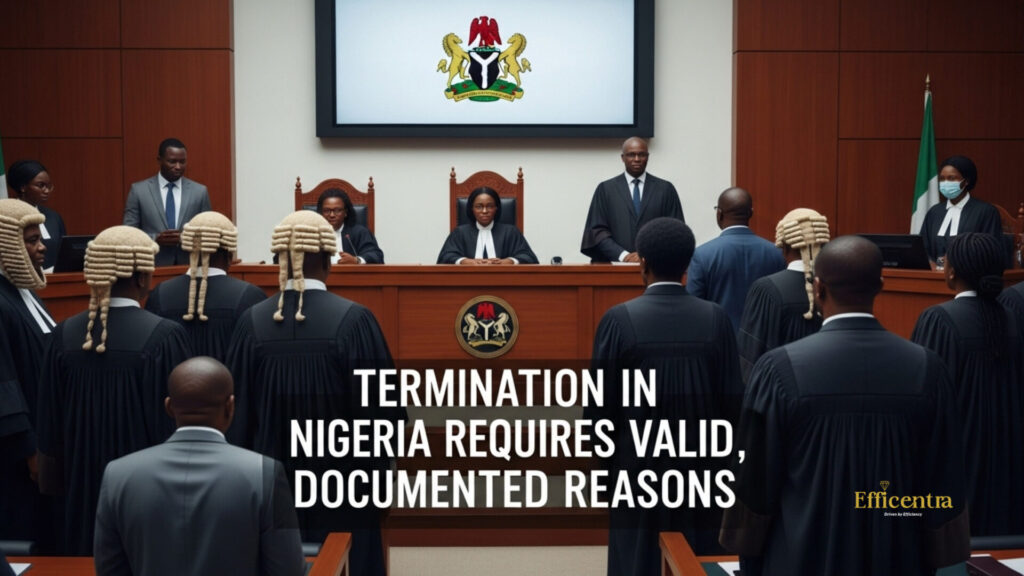
1. Termination Requires Valid, Documented Reasons
For decades, private sector employers believed they could terminate employment contracts without stating reasons, simply by providing notice or paying salary in lieu. This practice, known as termination simpliciter, is no longer defensible.
The Legal Shift: The NICN now applies Article 4 of ILO Convention No. 158, which requires that employment termination be based on valid reasons connected to the worker’s capacity, conduct, or the operational requirements of the enterprise. Although Nigeria has not ratified this Convention, Section 254C(2) of the Constitution empowers the NICN to apply international labour standards directly.
Recent Case Application: In Mrs. Eluemuno Olumagin v. Total E & P Nigeria Limited (Suit No. NICN/LA/580/2018, judgment delivered May 16, 2023), the Court held that failure to follow the company’s detailed disciplinary procedure, coupled with arbitrary sanctions outside company policy, constituted unfair labour practice. The company was ordered to pay substantial damages.
Similarly, in Nkechi Catherine Ogbonnah v. Mikano International Limited (Suit No. NICN/LA/178/2019, judgment delivered June 13, 2023), the Court awarded ₦10,000,000 in general damages to an employee terminated shortly after resuming from leave, finding the termination lacked proper justification.
The Lesson for SMEs: Every termination letter must cite a clear, verifiable business reason documented poor performance based on quarterly reviews, genuine redundancy due to restructuring, or proven misconduct following proper investigation. Generic statements like “services are no longer required” will expose you to unfair dismissal claims and substantial damages.

2. Fair Hearing is Mandatory Before Dismissal for Misconduct
The principle of Audi Alteram Partem (hear the other side) represents perhaps the single biggest reason employers lose dismissal cases at the NICN, even when employee misconduct is genuine.
The Constitutional Requirement: The NICN treats fair hearing as a constitutional right that applies to all employment relationships. Even in cases of alleged gross misconduct theft, fraud, or serious insubordination employers must follow strict due process before imposing termination.
Required Procedure:
- Written Query: Formal notification specifying the allegations
- Opportunity to Respond: Reasonable time for written defense
- Investigation Panel: Impartial hearing where the employee can present their case
- Adherence to Company Handbook: Strict compliance with your documented disciplinary procedure
Recent Case Application: In Adefisoye Stephen Abiodun v. Safari Support West Limited (Suit No. NICN/LA/347/2023, judgment delivered September 17, 2024), the Court emphasized that unilateral extensions of probation without proper communication, and termination without clear performance standards, violated principles of natural justice.
The 2023 judicial review by Senior Advocate Folabi Kuti highlighted consistent NICN rulings that employers must issue formal queries and convene investigation panels before termination, regardless of the severity of alleged misconduct. Failure to follow your own Employee Handbook procedures is treated as denial of fair hearing, rendering dismissals wrongful.
The Lesson for SMEs: Your Employee Handbook is a binding legal document. Train all managers on the non-negotiable requirement to follow documented disciplinary procedures completely. Never dismiss an employee for misconduct without exhausting every procedural step outlined in your handbook. Shortcuts cost substantially more than compliance.
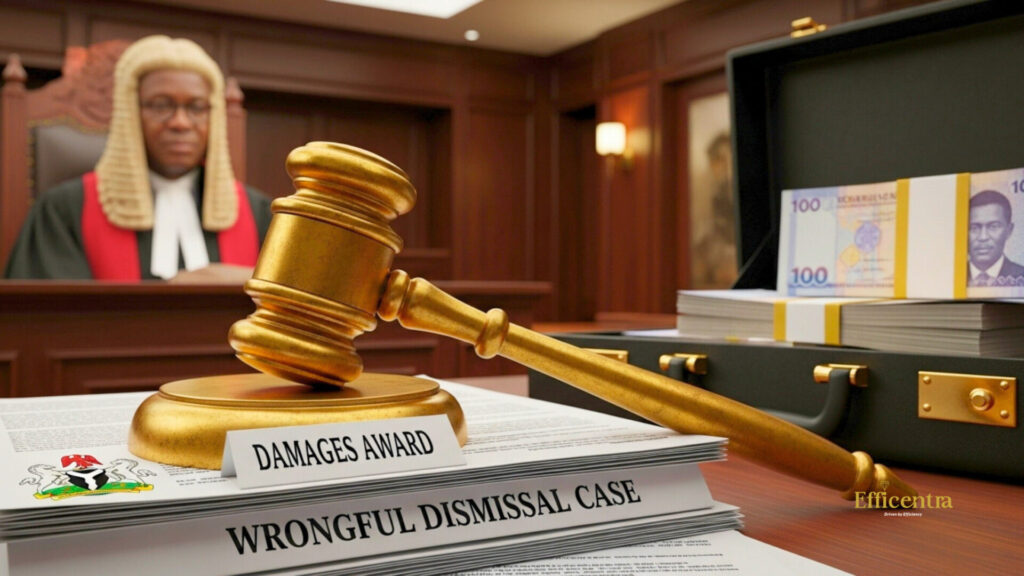
3. Substantial Damages Now Awarded for Wrongful Dismissal
The financial landscape of employment litigation has transformed dramatically. The NICN no longer limits damages to notice period salaries.
The Financial Reality: Leveraging its equitable powers under Section 19 of the National Industrial Court Act, 2006, the NICN now awards substantial general damages and sometimes exemplary damages for wrongful dismissal, particularly where there is denial of fair hearing, bad faith, or unfair labour practices.
Damage Calculations: These awards compensate not just for technical contract breaches, but for the manner of dismissal, reputational damage, and breach of fair labour standards. Awards now regularly equal several months or years of salary.
Case Examples:
- In Linda Jokanola v. Nigeria LNG Limited (Suit No. NICN/LA/261/2013, judgment delivered May 10, 2023), the Court awarded ₦10,000,000 in general damages for wrongful termination that violated the employee’s constitutional rights and constituted psychological harassment.
- In Nkechi Catherine Ogbonnah v. Mikano International Limited (2023), the Court awarded ₦10,000,000 in general damages, demonstrating the NICN’s willingness to impose significant financial penalties for procedural violations.
- Legal analysis from leading Nigerian law firms confirms that high-profile cases have seen awards exceeding ₦100,000,000 in exemplary damages where dismissals were particularly egregious.
Additional Penalties: The NICN takes serious view of employers who fail to formalize employment relationships. Missing Employment Letters or consistent non-remittance of statutory deductions (Pension, PAYE) attract separate, significant penalties.
The Lesson for SMEs: The financial risk of procedural shortcuts now far exceeds compliance costs. Ensure every employee has a formal Employment Letter. Prioritize consistent, accurate remittance of all statutory obligations. Proper documentation and procedure adherence represent your most cost-effective protection against crippling judgments.
Practical Action Steps
Immediate Actions:
- Audit Your Employee Handbook – Ensure disciplinary procedures are clearly documented and legally compliant
- Verify Employment Documentation – Confirm every employee has a signed Employment Letter
- Review Termination Procedures – Train HR and managers on mandatory fair hearing requirements
- Document Performance Issues – Implement quarterly performance review systems with written records
- Confirm Statutory Compliance – Audit pension and tax remittances for accuracy and timeliness
Long-Term Protection:
- Engage HR legal counsel to review and update your employment policies annually
- Implement proper performance management systems that create documentation trails
- Establish independent disciplinary panels as outlined in your handbook
- Never terminate without documented, valid business reasons
Final Takeaway
The modern reality of Nigerian labour law provides employees with robust protections backed by constitutional authority. Your greatest defense against costly industrial disputes is a proactive, documented, and procedurally fair HR system.
Your Employee Handbook, your adherence to due process, and your integrity in stating termination reasons are not administrative burdens they are strategic business protections that prevent financial catastrophe.
The cost of compliance is minimal. The cost of non-compliance is catastrophic.
Need Help Protecting Your Business?
Schedule a complimentary 30-minute HR Compliance Assessment with Efficentra Limited. We’ll identify your exposure areas and provide actionable recommendations to safeguard your business from costly NICN judgments.
📞 Book Your 30 mins Free Consultation
Efficentra Limited specializes in strategic HR solutions for Nigerian SMEs, helping business owners build compliant systems that protect against legal exposure while driving organizational performance.
References & Further Reading
NICN Case Judgments Cited:
- Mrs. Eluemuno Olumagin v. Total E & P Nigeria Limited – Suit No. NICN/LA/580/2018 (May 16, 2023)
- Linda Jokanola v. Nigeria LNG Limited – Suit No. NICN/LA/261/2013 (May 10, 2023)
- Nkechi Catherine Ogbonnah v. Mikano International Limited – Suit No. NICN/LA/178/2019 (June 13, 2023)
- Adefisoye Stephen Abiodun v. Safari Support West Limited – Suit No. NICN/LA/347/2023 (September 17, 2024)
Legal Analysis & Resources:
- Review of Significant NICN Decisions in 2023 by Folabi Kuti SAN
- NICN Judgment Portal – Access to full court judgments
- Constitution of the Federal Republic of Nigeria (Third Alteration Act, 2010) – Section 254C
- ILO Convention No. 158 – Termination of Employment Convention, 1982
- National Industrial Court Act, 2006 – Section 19 (Equitable Powers)
For Legal Guidance: All case interpretations in this article are based on publicly available NICN judgments and legal analyses. For specific legal advice regarding your business, consult with qualified employment law counsel.